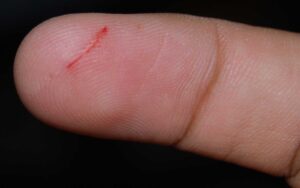
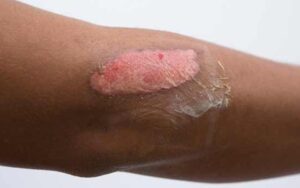
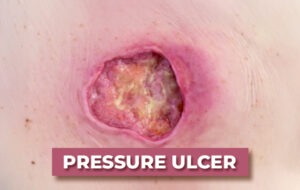
Wound healing ointments are topical creams designed to shield wounds, prevent infection, and promote rapid healing. Talking about mode of action – They work by creating a moist, breathable barrier that keeps the wound from drying out and lessens the probability of scarring. Majority of ointments comprise ingredients – linoleic acid, sesame oil, and beeswax, while few may have antiseptic properties to fight germs (or bacteria). The selection of ointment depends on the type of wound, with some formulated for general cuts and scrapes, whereas others are specialized for burns, bedsores, or diabetic foot ulcers.
Steps for Applying Ointment on Distinct Types of Wounds
Cleaning the Wound
Significance of Wound Hygiene:
Proper wound hygiene is the first and most crucial step in wound care. Cleaning the wound effectively removes dirt, debris, as well as germs (or bacteria), which helps prevent infections and promotes rapid healing.
Best Practices for Cleaning:
Wash Your Hands: Prior to touching the wound, wash your hands thoroughly with soap and water to avoid introducing new bacteria.
Rinse the Wound: Utilise clean running water to rinse the wound and remove any visible dirt or debris. Avoid strong antiseptics or hydrogen peroxide, as they can damage healthy tissue.
Utilise Mild Soap: Gently clean the area around the wound with mild soap and water, careful not to scrub the wound.
Pat Dry: Utilise a clean, soft cloth or sterile gauze to pat the wound dry, ensuring the area is completely dry prior applying ointment.
Advantages of Ointment for Wound Healing:
Prevents Infection: Ointments create a barrier, keeping harmful germs (or bacteria) from entering the wound. This aids wounds heal cleanly.
Keeps Wound Moist: A moist environment is important for healing. Ointments prevent drying, permitting cells to repair and new skin to form.
Lessens Scarring: By keeping the wound hydrated and shielded, ointments help decrease thick or noticeable scars.
Soothes Pain/Discomfort: Majority ointments offer a calming effect, reducing irritation, itching, and mild pain during healing.
Fibroheal Woundcare Innovations
D-FIBROHEAL Ag OINTMENT
Silk protein and silver based topical antimicrobial ointment to avert infection and enhance healing in skin ulcers, sores, minor cuts, burns, scalds, lesions, blisters, abrasions, small lacerations, insect bites etc.
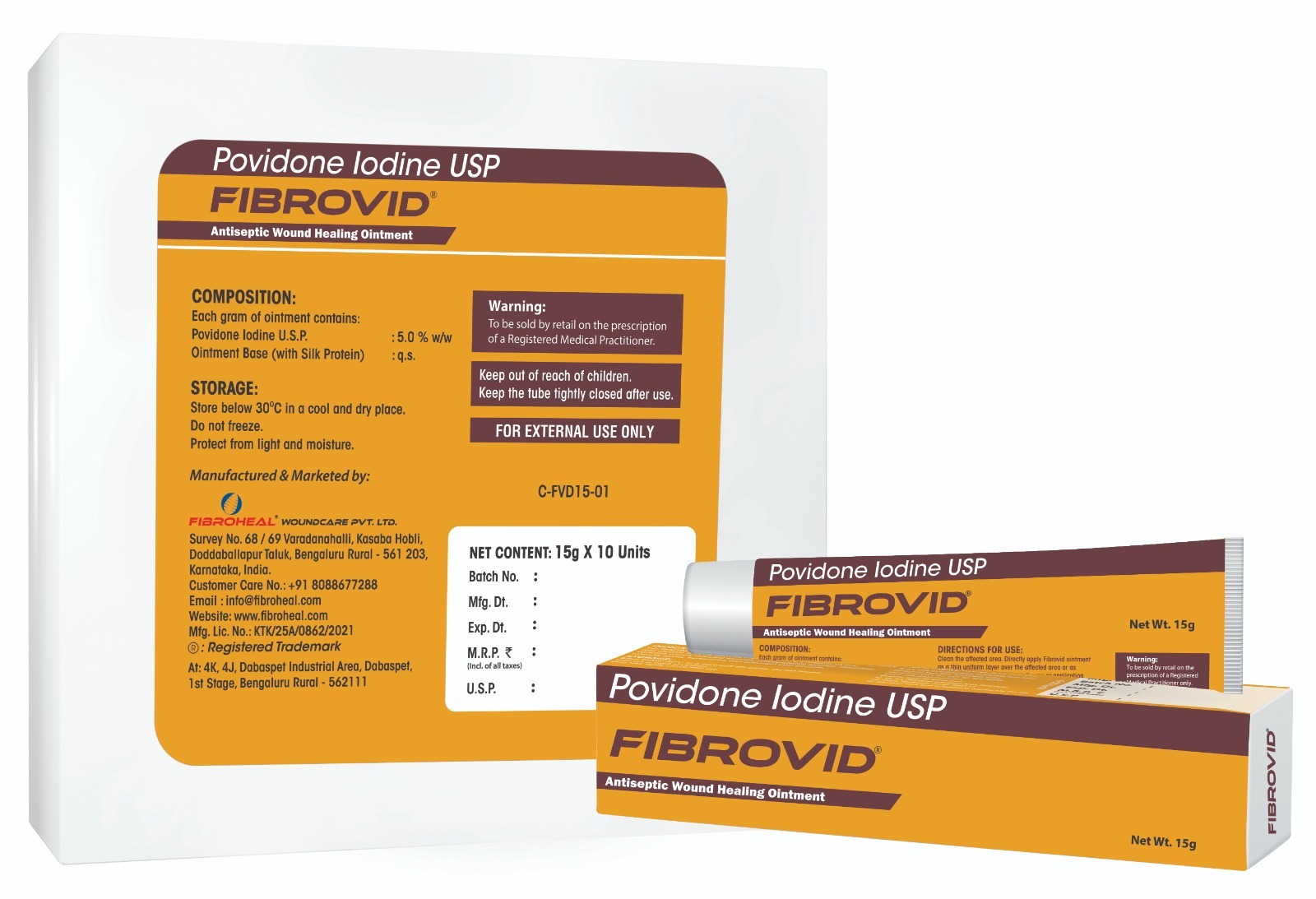
FIBROVID
A broad-spectrum topical antiseptic as well as wound healing ointment, which has a unique patented amalgamation of Povidone-Iodine (PVP-I), a complex polymer of polyvinyl pyrrolidone with iodine and silk protein. This combination effectively works against all 4 major classes of pathogens i.e
bacteria (both G+ve & G-ve, as well as antibiotic resistant strains)
fungi,
viruses and protozoa,
found in skin and wound infections and facilitates an optimal environment for rapid wound healing.
When to Seek Medical Help:
Seek medical help if you observe any of the following:
Signs of Infection: An increased redness, swelling, heat, pus, or a foul smell from the wound.
Fever: A fever (elevated temperature) accompanying a wound could depict a systemic infection.
No Improvement: If the wound does not improve within a span of a few days or worsens.
Too much Pain: Uncontrolled pain despite home care measures.