Serous Drainage
- admin-fibroheal
- December 30, 2025
What is serous drainage?
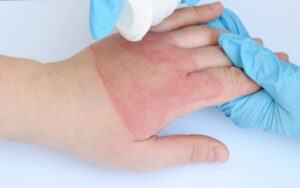
In simple terms, Serous drainage, or (blood serum) refers – a type of fluid that comes out of a wound with tissue damage. It’s normal for wound to leak small quantities of this clear fluid. However, if wound drains excess fluid, or if the fluid draining is thick such as – pus, reach out to a healthcare professional. Excess serous fluid or pus leaking from the wound can depict the presence of a bacterial infection.
What does serous drainage look like?
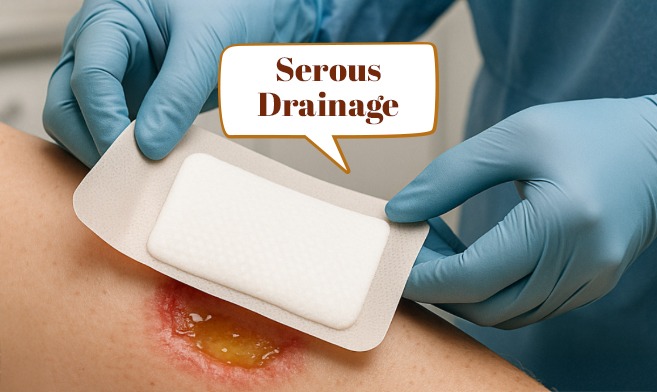
Serous drainage refers – a clear to yellow fluid. The texture of serous drainage is slightly thicker than water. When the bandage that covers wound is removed, their may be a wet outline in the gauze of bandage.
What makes up serous drainage?
Serous drainage is plasma devoid of proteins. Plasma refers – the liquid base of blood. Plasma is over 90% water and less than 10% solids. The solids comprise proteins such as fibrinogen, which is a protein which liver synthesizes to help with blood clotting.
When person gets a wound and begin to bleed, blood proteins stop below the surface of skin at the wound to limit bleeding by coagulating. During coagulation, proteins alter liquid blood into a semisolid state. This process prevents individual from losing excess blood. As a result, liquid plasma (devoid of proteins) moves to the surface of the wound while the proteins stay behind.
Different types of wound fluids
There are three distinct types of fluid in addition to blood that come from a wound, comprising:
- Serous drainage: Serous drainage refers – a clear to yellow fluid that’s a little bit thicker than water. Serous drainage is normal and it’s a sign that body is healing.
- Serosanguinous fluid: Serosanguinous fluid refers – a combination of serous fluid and blood. It’s typically a light pink to red color. This is a sign that individual’s body is healing the wound and isn’t a concern in normal quantities.
- Purulent drainage: Purulent drainage, refers to the thickest of the three types, is white, yellow or brown fluid. It depicts that bacteria/germs entered person’s wound and caused an infection. Infections can be harmful to individual’s body, so this fluid requires treatment. It may have an unpleasant odor.
Causes
Serous drainage happens when body heals a wound. It’s crucial for body to direct blood and other body fluids to the area/site of a wound to commence the healing process. Person’s immune system commences the process of inflammation, which sends components of immune system to the wound to destroy invaders such as – germs or bacteria that can make individual sick. The process of bringing fluids to the site/area of a wound causes it to have serous drainage. Person may also have serous drainage if they have a significant amount of swelling beneath their skin.
There are three types of wounds that can cause serous drainage, comprising:
- An open sore: An open sore is the most predominant type of wound caused by tissue damage in skin.
- Venous ulceration: This type of wound occurs when the veins in person’s legs aren’t able to push blood back up toward heart as well as they should and their legs swell. The poor blood flow and excess swelling break down the skin barrier and can cause an ulcer.
- A partial-thickness wound: A partial-thickness wound refers – a break in the layers of skin that doesn’t reach below the dermis (the second layer of skin).
Individual may also have serous drainage post surgery.
Stopping serous drainage
Serous drainage will stop on its own as wound heals. Treating wound helps serous drainage go away and can help prevent infection. To take care of wound, one should:
- Wash the wound gently with soap and water. Pat the wound site or area dry.
- Cover the wound in a bandage or wound dressing. Person might want to apply a topical antibiotic to wound to prevent infection.
- Change the bandage over wound day to day or as directed.
- Follow a healthcare provider’s instructions if they mention a specific way that to take care of wound.
- In majority cases, repeated usage of alcohol or hydrogen peroxide can lengthen healing process or prevent a wound from healing properly. Ask healthcare provider what to apply to wound.